

How Modern Life Impacts Our Health (and How to Fix It)
Humans have evolved over thousands of years in an environment defined in part by daily physical activity, nutrient-dense whole foods, and natural light cycles aligned with the seasons and sun.
However within just a few generations, technological growth and convenience have transformed our daily routines so dramatically that humans from 50-100 years ago wouldn’t recognise them. While modern advances have made our lives easier, they’ve also created an acute mismatch between what our bodies were designed for and how we living today.
Understanding the position between modern life and our biology is a step toward feeling stronger, more energized, and in control of your wellbeing.
The Modern Mismatch: 3 Pillars Under Pressure
1. Ultra-Processed Diets and Energy Levels
The modern ‘western’ diet relies heavily on convenience foods that are high in refined sugars and industrial oils, yet low in essential nutrients. These hyper-palatable foods bypass our natural satiety signals, meaning our natural hormones of leptin and ghrelin are not being received properly by our bodies, making overeating easy while leaving us feeling sluggish. (If you want to research this further look at ‘Ultra-Processed People’ by Chris van Tulleken)
What the Research Says: A landmark study published in Cell Metabolism by Kevin D. Hall and colleagues found that participants eating an ultra-processed diet spontaneously consumed over 500 extra calories per day compared to those eating unprocessed whole foods—even when meals were matched for total calories, fat, and carbohydrates.
2. The Sedentary Desk Life
Sitting for long periods at work, commuting, and relaxing behind screens means physical activity often drops off outside of planned exercise. Extended sitting slows fat metabolism and impacts how effectively the body regulates blood sugar. People regularly are not meeting the basic government guidelines for exercise (in the UK), it’s recommended that adults aim for 150mins of moderate activity plus carrying out strengthening exercises 2 times a week.
What the Research Says: A massive meta-analysis published in The Lancet led by Dr. Ulf Ekelund demonstrated that sitting for prolonged periods without active breaks significantly elevates overall health risks. The researchers noted that small, frequent movements throughout the day are essential to buffer against these effects.
3. Screen Time and Sleep Quality
Bright artificial lighting and screen use late into the evening confuse our internal master biological clock (the suprachiasmatic nucleus). Blue light found in most homes and workplaces suppresses our natural production of melatonin, the hormone responsible for deep, restorative sleep. (For more information on this read “The Circadian Code” by Dr Satchin Panda)
What the Research Says: Research published in the Proceedings of the National Academy of Sciences (PNAS) found that evening screen exposure suppressed melatonin levels by over 55% and delayed the natural sleep cycle by more than an hour compared to reading printed material.
3 Simple, Actionable Habits to Reclaim Your Wellbeing
Improving your health doesn’t mean making drastic changes to your entire life. In fact making small, sustainable adjustments to how you eat, move, and rest builds long-term vitality that is sustainable .
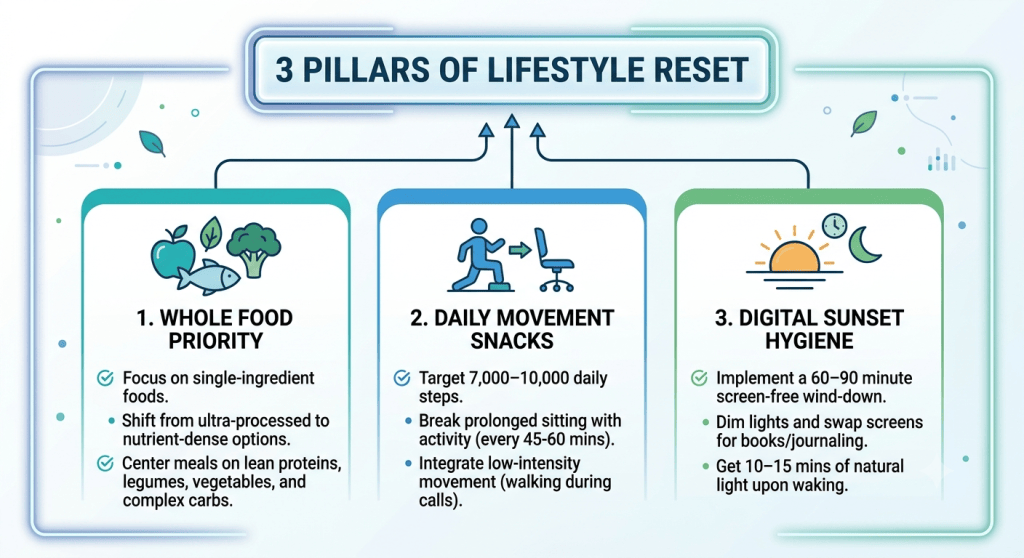
1. Focus on Whole, Single-Ingredient Foods
Instead of worrying over complex diets or calorie counting, shift your main focus to crowding out processed items with whole foods.
- Prioritize Protein and Fiber: Build meals around lean protein sources, vegetables, complex carbs, and healthy fats. Fiber slows digestion, keeping blood sugar stable and cravings manageable.
- Keep It Simple: Base your grocery list around fresh produce, quality meats, fish, eggs, and whole grains.

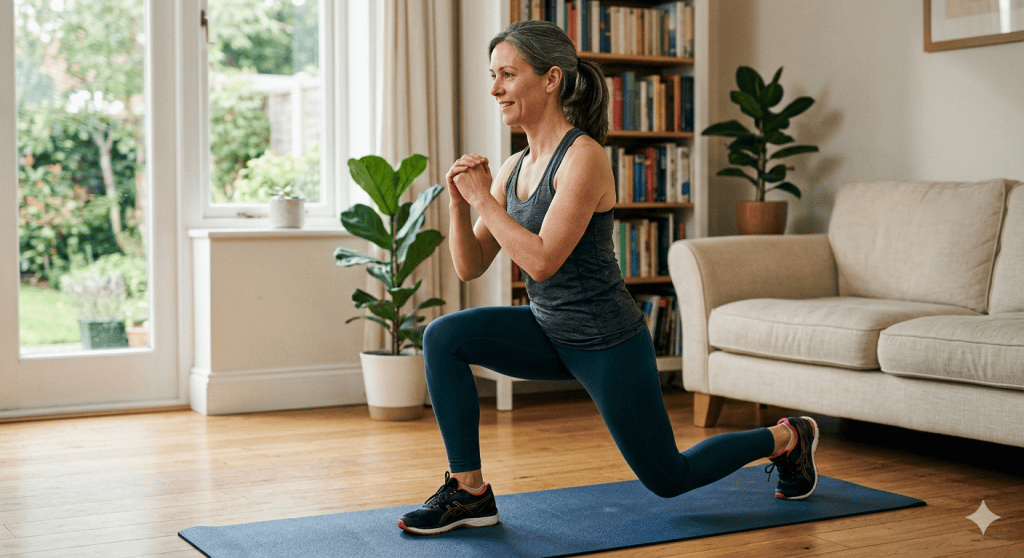
2. Add “Movement Snacks” to Your Day
An hour of exercise is fantastic, but keeping active across the rest of your day is equally vital for energy and mobility.
- Take 2-Minute Breaks: Every 45 to 60 minutes, stand up, stretch, or walk around for a few minutes to keep your circulation moving.
- Keep Moving Naturally: Aim for consistent daily movement—whether that’s a brisk walk, taking the stairs rather than the lift, park further away when going to the shops or a quick mobility flow between tasks.
3. Establish an Evening Digital Wind-Down
Protecting your sleep is one of the most effective ways to balance hormones, restore energy, and improve recovery.
- Get Morning Sun: Aim for 10–15 minutes of natural outdoor daylight shortly after waking to set your circadian rhythm for the day even if it’s not sunny or it’s winter.
- Dim the Lights: Turn down bright overhead lights and switch off screens 60 minutes before bed. Swap late-night scrolling for a warm shower, reading, or stretching, consider creating a routine/ mode on your phone or device that stops you using it after a certain point (unless it’s an emergency) then your not tempted to keep scrolling.
Ready to Take the Next Step for Your Health?
Small, consistent habits pay compound interest over time. If you want support tailored to your body, goals, and daily schedule, let’s work together to build a plan that fits seamlessly into your lifestyle.

